
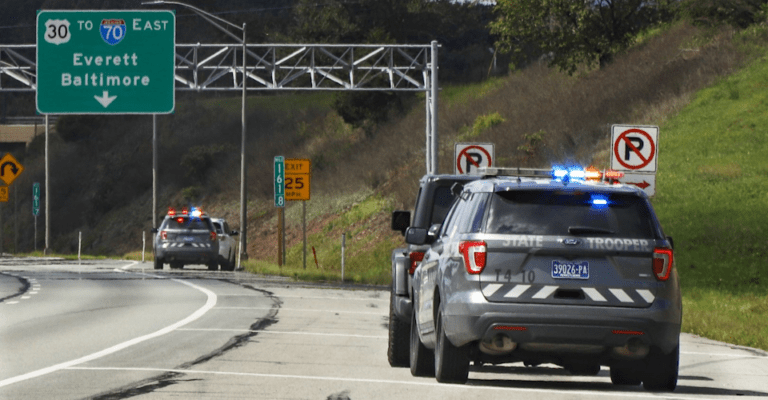
The “Move Over Law” is a vital safety regulation designed to protect the lives of emergency responders, highway workers, and motorists who are vulnerable on the side of high-speed roadways. These laws were enacted in response to the high number of fatalities occurring when distracted or speeding drivers struck emergency vehicles parked on the shoulder. While specific requirements vary by state, the fundamental principle remains universal: when you see stationary emergency lights ahead, you must provide a buffer of safety.
The primary requirement of the law is for drivers to vacate the lane closest to the stationary vehicle. If you are traveling on a multi-lane highway and see a police car, fire truck, ambulance, or tow truck with flashing lights on the shoulder, you are legally required to signal and move over one lane, provided it is safe to do so. This maneuver creates a “lane of cushion,” significantly reducing the risk of a “sideswipe” collision and protecting personnel who may be stepping in and out of their vehicles or working near the edge of the pavement.
In situations where traffic density or road conditions make lane changes impossible or dangerous, the law requires drivers to “Slow Down.” This means reducing speed to a level that is significantly lower than the posted limit—often 20 miles per hour below the limit in many jurisdictions—and proceeding with extreme caution. This ensures that if an unexpected movement occurs on the shoulder, the driver has the reaction time and braking distance necessary to avoid a tragedy.
Ultimately, the Move Over Law is about shared responsibility and respect for those whose workplace is the side of the road. Violating these laws often carries heavy fines and points on a driver’s license, but the real cost is measured in human lives. By moving over or slowing down, drivers demonstrate a proactive commitment to road safety, ensuring that first responders can do their jobs and return home safely at the end of their shifts.
🚨 Move Over Protocol
- See the Lights: Start planning your move as soon as you see flashes on the horizon.
- The Lane Rule: If there are multiple lanes, move over one lane to the left.
- The Speed Rule: If you cannot move over, slow down significantly (e.g., 20 mph under the limit).
- Expanded Scope: In many states, this law now includes utility trucks, road crews, and disabled civilian vehicles with hazard lights.
