
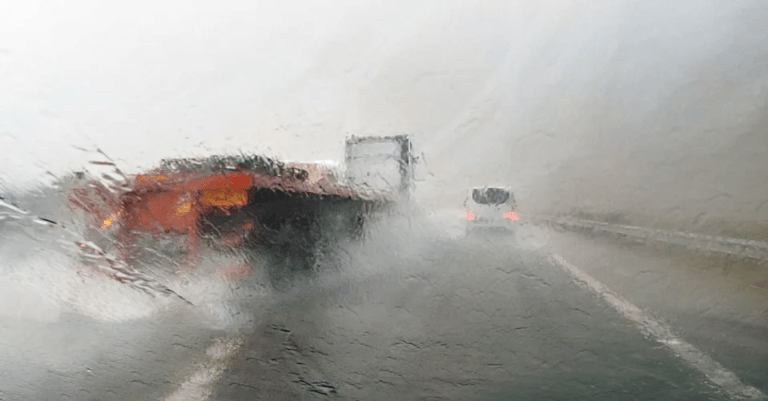
Driving safely through a heavy rainstorm requires a combination of technical vehicle control and heightened situational awareness. When visibility drops and traction decreases, the primary goal shifts from maintaining speed to ensuring stability. The most critical adjustment a driver can make is reducing velocity. Hydroplaning, where tires lose contact with the road and slide on a thin film of water, can occur at speeds as low as 35 miles per hour. By slowing down, the tire treads have more time to channel water away, maintaining essential grip on the pavement.
Beyond speed, maintaining a significant space cushion is vital. Braking distances increase dramatically on wet surfaces because friction is reduced. A standard three-second following distance should be doubled to at least six seconds during a downpour. This extra space provides a necessary buffer against the sudden stops of other drivers and helps avoid the heavy spray kicked up by large trucks, which can momentarily blind a motorist. Furthermore, drivers should avoid using cruise control in the rain; manual control allows for instant throttle adjustment if the car begins to hydroplane.
Visibility is the final pillar of storm safety. Headlights should be turned on to help other drivers see your vehicle, but high beams should be avoided as they reflect off the raindrops and create a blinding glare. If the windshield wipers cannot keep up with the volume of water or if the defroster cannot clear the fogging glass, the safest move is to exit the roadway entirely. When pulling over, it is essential to move as far onto the shoulder as possible and keep hazard lights flashing to ensure you are not mistaken for a moving vehicle. By prioritizing these techniques, drivers can navigate the unpredictable nature of a heavy storm with composure and safety.
