
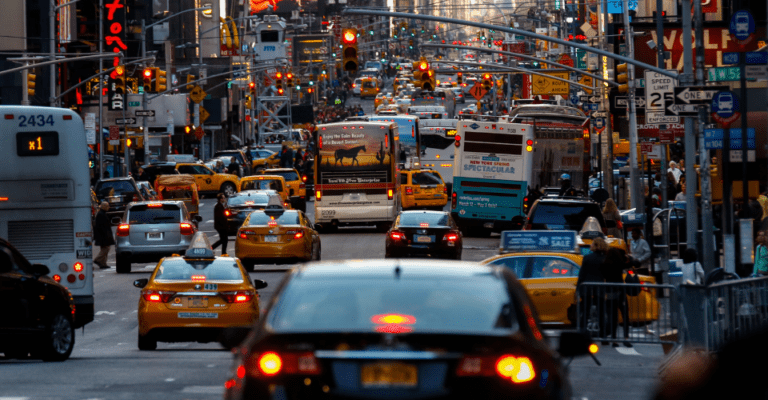
Driving through a dense city environment requires a proactive visual strategy known as searching ahead. Unlike highway driving, where the path is often linear, urban landscapes are saturated with unpredictable variables. To navigate safely, a driver must transition from a reactive mindset to a predictive one, scanning at least twelve to fifteen seconds—or about one to two blocks—down the road. This extended visual lead time allows for the early detection of hazards before they become immediate emergencies.
The primary focus of searching ahead is identifying potential conflict points. In a city, these are found at every intersection and driveway. By looking deep into the environment, a driver can spot a changing traffic light blocks away, allowing for a gradual deceleration that saves fuel and prevents rear-end collisions. Furthermore, searching ahead enables the driver to identify “stale” green lights or pedestrian countdown timers that signal an imminent change in traffic flow. This high-aim vision ensures that the driver is never surprised by the sudden braking of vehicles in front of them.
Equally important is the observation of the “sidewalk-to-sidewalk” area. A skilled city driver scans the spaces between parked cars for signs of life, such as the wheels of a bicycle turning or a pedestrian’s feet. By looking ahead, you can anticipate a delivery truck double-parking or a bus pulling away from a curb. This situational awareness provides the necessary time to check blind spots and change lanes smoothly, rather than making erratic, last-second maneuvers that disrupt the flow of traffic.
Ultimately, searching ahead in a city environment is about creating a “space cushion.” It transforms a stressful, high-intensity task into a manageable process of information gathering. By prioritizing long-range scanning over the immediate bumper of the car ahead, drivers can navigate the urban maze with confidence, precision, and safety.
